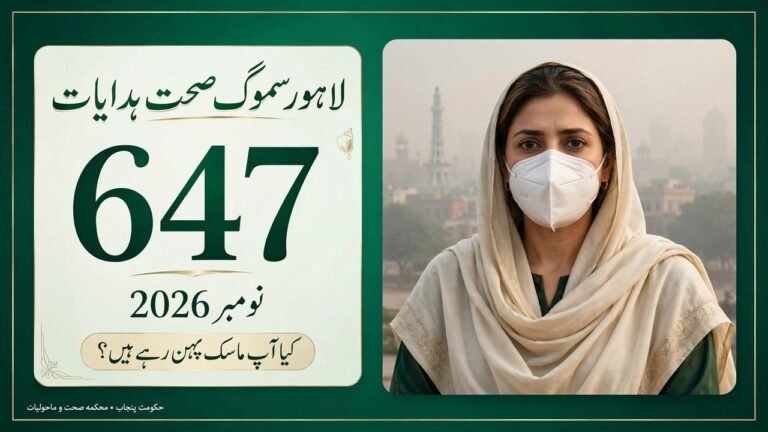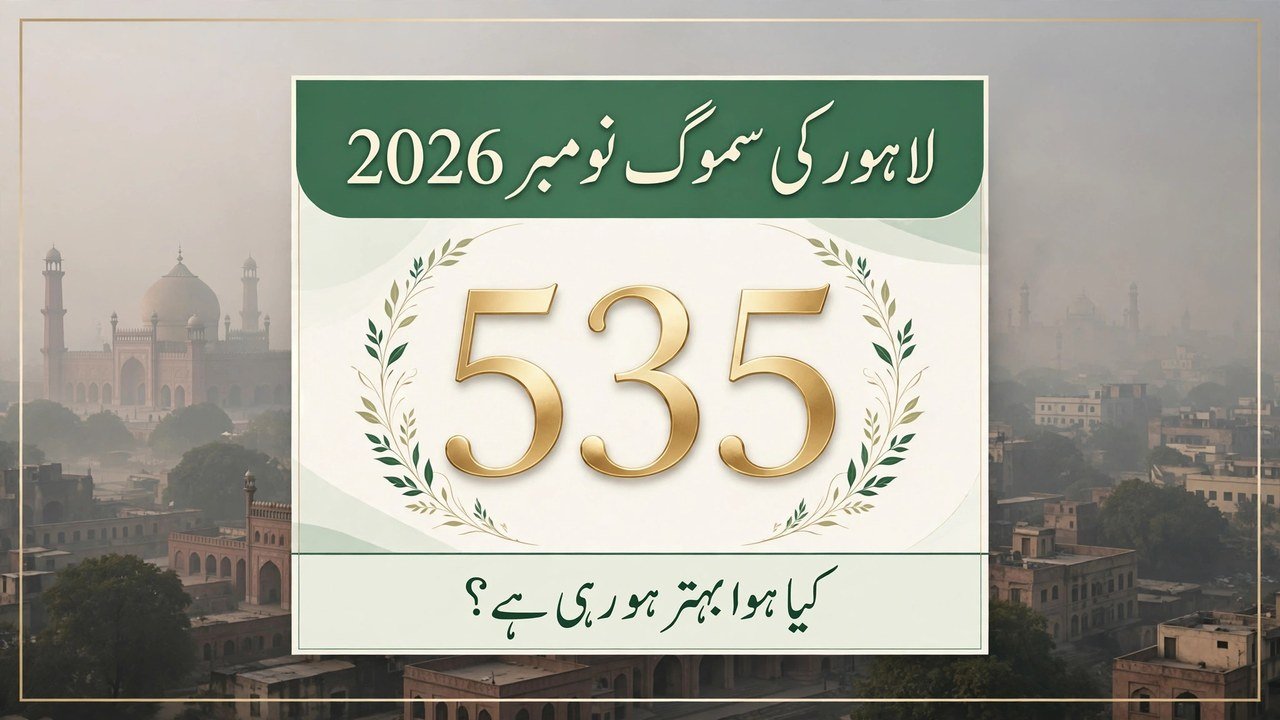
The Lahore Smog November 2026 story has two very different chapters. October was the cleanest October in five years, with the average AQI falling and no day crossing into the hazardous band. Then, on the morning of 2 November, the AQI hit 535, one of the worst readings of the season. Is the air getting better, or worse? Both things are true at once, and the numbers explain why.
This article puts the verified figures side by side: the October improvement, the November spike, and what the department advises when the air turns hazardous. Every figure below is dated.
| Detail | Verified Figure |
|---|---|
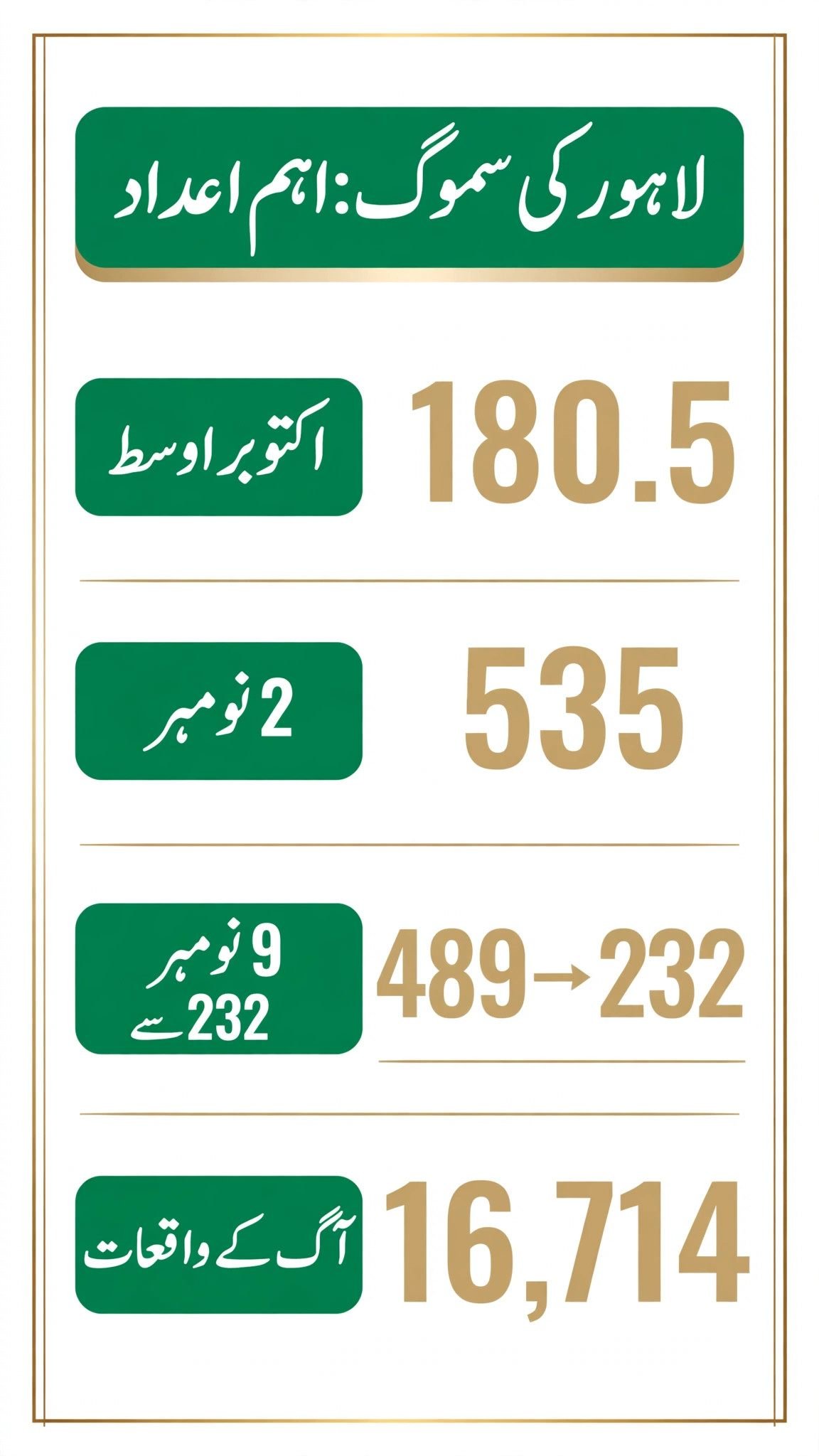
| October 2026 average AQI | 180.5 (October 2025: 204.6; October 2024: 213) |
| Peak AQI, October 2026 | Down 28% against October 2025 |
| Hazardous days (above 300), October | 0 in 2026; 4 in 2025 |
| Highest October 2026 reading | 262 on 31 October |
| 2 November 2026, 8am | AQI 535; PM2.5 343 micrograms per cubic metre |
| 9 November 2026 | AQI 489 at 9am, down to 232 by 3pm |
October 2026: The Cleaner Month
The October improvement was real, measured on the department’s own monitoring network. Senior Minister Marriyum Aurangzeb shared the figures with Dawn, and the department published its own assessment.
- Average AQI: 180.5 in October 2026, against 204.6 in October 2025 and 213 in October 2024.
- Peak AQI down: the department reported the peak AQI fell by 28% against the same period last year.
- No hazardous days: Lahore recorded no day above 300 in October 2026, against four such days in 2025.
- PM2.5 down: the Pakistan Air Quality Initiative found average PM2.5 fell from 136.3 to 100.1 micrograms per cubic metre.
- Six pollutants better: the department reported a 15% net improvement across six major air pollutants in the first year of real-time monitoring.
2 November: The Morning AQI Hit 535
The improvement did not survive the first week of November. On Monday 2 November, Lahore’s air turned hazardous within hours.
- The reading: AQI 535 at 8am, with PM2.5 at 343 micrograms per cubic metre.
- The band: the reading sat in the hazardous band of the US AQI scale.
- The ranking: Lahore was again ranked among the world’s most polluted major cities that morning.
What Pushed the Air Back Into Hazardous
No single source explains a spike like the one on 2 November. Officials and analysts point to a mix of weather and burning.
- Calm air: the department’s director general told Reuters that falling temperatures created a temperature inversion, trapping smoke and dust, with winds extremely low.
- Crop fires: satellites detected 16,714 likely crop-residue fires in Punjab between 1 October and 9 November.
- Cross-border air: the government cited Diwali fireworks, residue burning in Indian Punjab, easterly winds and stagnant conditions on 9 and 10 November.
- Weather’s share: the initiative estimated favourable weather explained much of October’s improvement, with only about 4% from other factors.
- Fires upwind: very high numbers of fires were counted upwind of Lahore on 10, 11 and 12 November.
9 November: AQI Fell From 489 to 232
The same network that recorded the spike also recorded a sharp recovery a week later, as emergency enforcement and mitigation operations ran on Monday 9 November.
- The fall: the average AQI stood at 489 at 9am and dropped to 232 by 3pm, a cut of 257 points, or about 53%.
- Every station improved: data from all 11 monitoring stations showed a decline during the period.
- Biggest gains: Egerton Road fell from 500 to 167, followed by GT Road, down from 500 to 172.
- Coordinated response: the department’s secretary said it acted through enforcement, real-time monitoring and targeted field interventions.
How to Read AQI Numbers Correctly
Air quality numbers are easy to misread, because an hourly spike, a daily average and a monthly average measure different things.
- Hourly readings: a figure such as 535 at 8am is a snapshot; the reading can change sharply within hours.
- Daily averages: a daily average smooths the spikes and shows how bad the whole day was.
- Monthly averages: October’s 180.5 is a monthly average, and it can improve while individual days stay unhealthy.
- Limits still breached: PM2.5 exceeded Pakistan’s daily limit on every one of October’s 31 days.
What Residents Should Do Now
The department’s advice follows the AQI band, so check the band before stepping out.
- Check the dashboard: the Punjab EPA dashboard at aqi.punjab.gov.pk updates every hour and ranks every Punjab city.
- Above 200: everyone should wear a mask outdoors and avoid heavy effort.
- Above 400: everyone should stay indoors, and use an N95 mask and protective glasses if going out is unavoidable.
- Protect the vulnerable: children, older people and anyone with asthma or heart disease should stay indoors.
| Check and Report | Detail |
|---|---|
| Live AQI | aqi.punjab.gov.pk (hourly, free, no login) |
| Helpline | 1373 (report burning, black smoke, smoky vehicles) |
| Reporting app | Green Punjab app |
Conclusion
October 2026 showed Lahore’s air can improve, with the average AQI down, the peak down 28% and no hazardous day. November showed how quickly that progress can be undone, with AQI 535 on 2 November. The answer for residents is simple: check the dashboard every morning, follow the band, and report the smoke you see.
FAQs
What was Lahore’s AQI on 2 November 2026?
It reached 535 at 8am, with PM2.5 at 343 micrograms per cubic metre, in the hazardous band, confirmed by IQAir and the department.
Was October 2026 really cleaner than last year?
Yes, on the averages: average AQI 180.5 against 204.6 in October 2025, the peak down 28%, and no day above 300. But PM2.5 still exceeded the daily limit every day.
Why did the air get worse in November?
A temperature inversion trapped pollution near the ground, winds were extremely low, and crop-residue burning continued.
Where can I check Lahore’s AQI live?
On the Punjab EPA dashboard at aqi.punjab.gov.pk, which updates every hour and is free without any login.
How do I report burning or smoke?
Call helpline 1373 or report through the Green Punjab app.

The editor of epdpunjab.pk, covering the Environment Protection & Climate Change Department, Punjab and the CM Punjab Climate Leadership Development Internship Program 2026, with information verified from official sources.