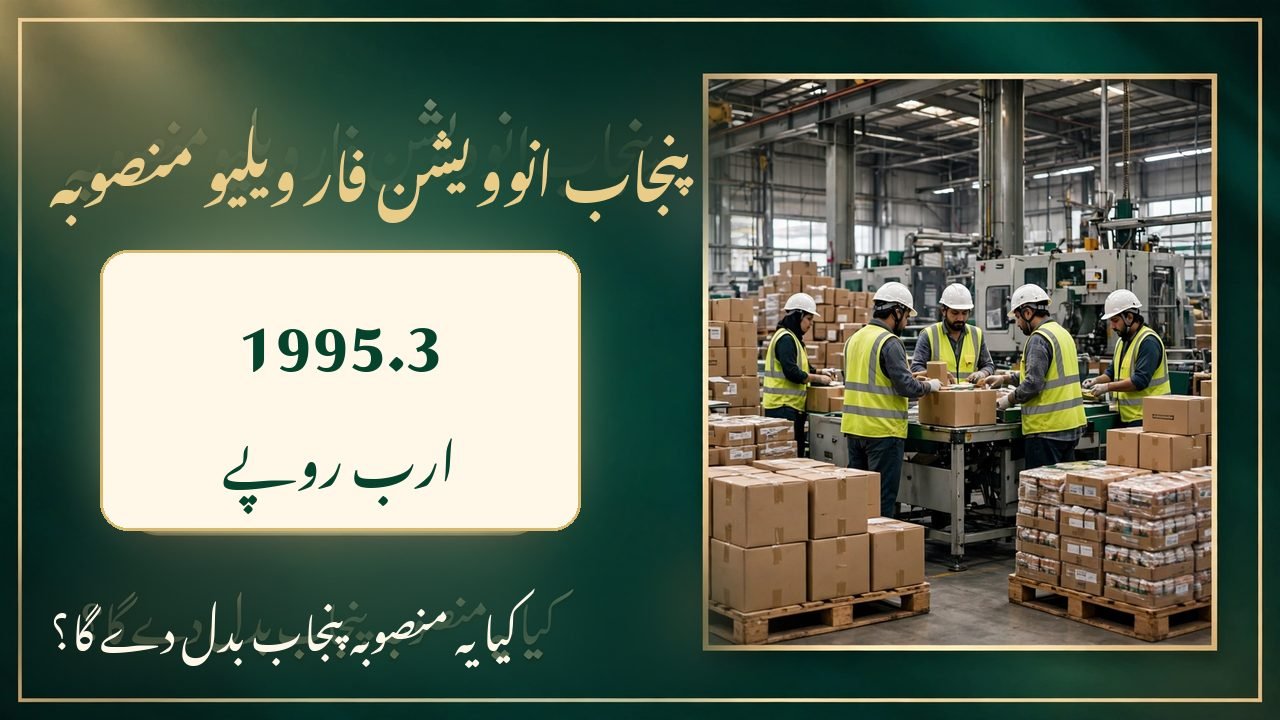
On 30 October 2026, Chief Minister Maryam Nawaz Sharif launched Punjab’s biggest economic plan in years from Lahore. The Punjab PIVOT Plan 2026–29 is a three-year, Rs 1,995.3 billion programme to turn Punjab from an import-dependent province into an export-led industrial hub. It promises more exports, more jobs and large-scale training, and now frames the province’s industrial policy until 2029.
This article explains the plan in plain language: what PIVOT stands for, where the money comes from, its targets, its focus industries, and how it will be run. Every figure here is a government target, not a result already achieved.
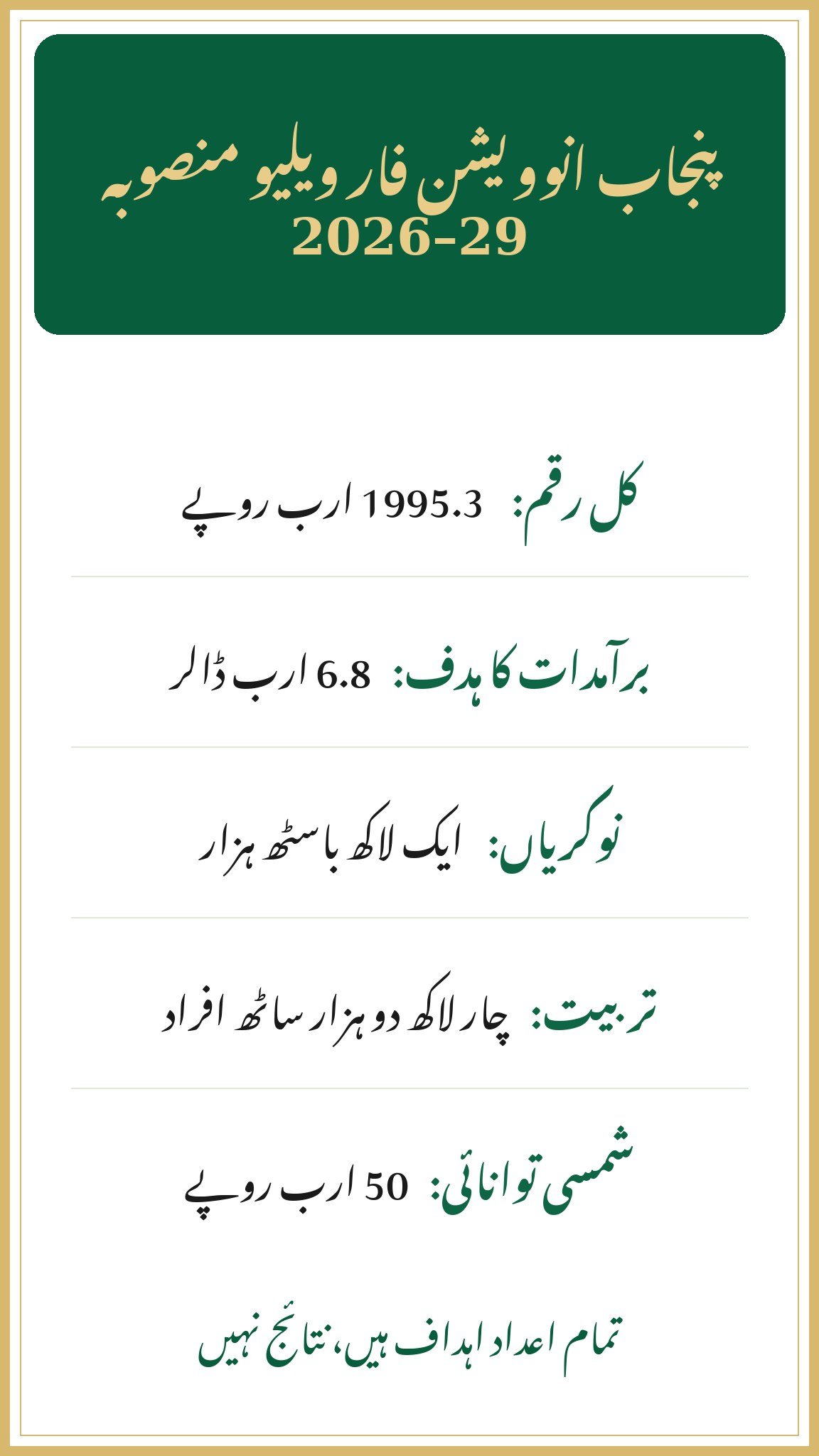
| Detail | Plan Fact (Target) |
|---|---|
| Launched | 30 October 2026, Lahore, by Chief Minister Maryam Nawaz Sharif |
| Plan period | 2026–29 (three years) |
| Total size | Rs 1,995.3 billion |
| Public investment | Rs 1,089 billion |
| Targeted private investment | Rs 906 billion |
| Export target | $6.8 billion in additional exports |
| Jobs target | 162,000 direct jobs; 1 million-plus livelihoods |
| Training target | 402,060 people trained over three years |
What PIVOT Stands For
PIVOT is short for Punjab Innovation for Value, Opportunity and Transformation.
- Full name: Punjab Innovation for Value, Opportunity and Transformation (PIVOT) Plan 2026–29.
- Core aim: transforming Punjab into an export-led industrial hub.
- Launch date: the plan was launched on 30 October 2026 by Chief Minister Maryam Nawaz Sharif in Lahore.
- Time frame: the plan runs for three years, 2026 to 2029.
Where the Rs 1,995.3 Billion Comes From
The headline figure mixes government spending with private money the plan aims to attract.
- Total size: the plan is worth Rs 1,995.3 billion in total.
- Public investment: Rs 1,089 billion of public investment over the three years.
- Private investment: Rs 906 billion is targeted private investment from businesses and investors.
- Target, not spending: both parts are targets for 2026–29, not money already spent or committed.
The Targets: Exports, Jobs and Training
The plan sets four headline targets for the end of the three-year period.
- Additional exports: the plan targets $6.8 billion in additional exports over the three years.
- Direct jobs: the plan targets 162,000 direct jobs.
- Livelihoods: the plan targets more than 1 million livelihoods supported through its programmes.
- Training: the plan targets training for 402,060 people over the three years.
Industrial Modernisation and STEP
The largest single allocation goes to making Punjab’s industries more modern and competitive abroad.
- Modernisation fund: Rs 753.7 billion for industrial modernisation, value addition and export competitiveness.
- STEP programme: the Strategic Trade Enhancement Programme (STEP), with a digital portal, is aimed at lifting Punjab’s exports.
- Concessional financing: Rs 300 billion in concessional financing for eligible businesses, at 0 to 5 percent interest.
- Portal link not confirmed: the STEP portal web address is unconfirmed in the published reports, so no link is given here.
Energy: Solar Power and Battery Storage
Industry needs cheap, reliable power, so the plan sets aside a large sum for solar and storage.
- Energy allocation: Rs 50 billion for solar power installations and Battery Energy Storage Systems (BESS).
- Why solar: solar should cut energy costs for industry and add clean power to the province’s supply.
- Why storage: battery storage holds solar power for use when the sun is not shining.
- Business benefit: cheaper, reliable power should make Punjab’s exporters more competitive.
Value Chains and Agro-Processing Parks
The plan picks industries where Punjab already has strength and pushes them up the value chain.
- Focus value chains: garments and textiles, sports goods, leather and footwear, surgical instruments, pharmaceuticals, fans, cutlery, steel and ceramics.
- Value addition: the aim is to sell finished, branded goods abroad instead of raw or semi-finished products.
- Agro-processing parks: four agro-processing parks, in Sargodha, Khanewal, Okara and Bhakkar.
- Farm link: the parks will process farm produce close to the farms, adding value before market.
| Contact and Helpline Details | Detail |
|---|---|
| Launched by | Chief Minister Maryam Nawaz Sharif, Lahore, 30 October 2026 |
| PIVOT Board chair | Senior Minister Marriyum Aurangzeb |
| Cabinet approval | Main features approved on 19 October 2026 |
| Operationalisation | Within six months of the launch |
| Government of Punjab portal | punjab.gov.pk |
Conclusion
The Punjab PIVOT Plan 2026–29 is Punjab’s Rs 1,995.3 billion bet on becoming an export-led industrial hub, launched on 30 October 2026 by Chief Minister Maryam Nawaz Sharif. Its targets are $6.8 billion in additional exports, 162,000 direct jobs, more than 1 million livelihoods, and training for 402,060 people over three years. The money splits into Rs 1,089 billion of public investment and Rs 906 billion of targeted private investment, including Rs 753.7 billion for industrial modernisation, Rs 300 billion in concessional financing at 0 to 5 percent through STEP, and Rs 50 billion for solar and battery storage. All of these figures are targets, and the full plan document with year-by-year schedules has not been published, so the verdict on PIVOT will come from what is actually delivered by 2029.
FAQs
What is the Punjab PIVOT Plan 2026–29?
The Punjab Innovation for Value, Opportunity and Transformation Plan 2026–29, a Rs 1,995.3 billion plan launched on 30 October 2026 by Chief Minister Maryam Nawaz Sharif to make Punjab an export-led industrial hub.
How much money does the PIVOT Plan involve?
Rs 1,995.3 billion in total: Rs 1,089 billion of public investment and Rs 906 billion of targeted private investment.
What are the main targets of the PIVOT Plan?
$6.8 billion in additional exports, 162,000 direct jobs, more than 1 million livelihoods, and training for 402,060 people over three years. These are targets, not achieved results.
Which industries does PIVOT focus on?
Garments and textiles, sports goods, leather and footwear, surgical instruments, pharmaceuticals, fans, cutlery, steel and ceramics, plus four agro-processing parks in Sargodha, Khanewal, Okara and Bhakkar.
Who oversees the PIVOT Plan?
A PIVOT Board chaired by Senior Minister Marriyum Aurangzeb oversees the plan, and the provincial cabinet approved its main features on 19 October 2026.

The editor of epdpunjab.pk, covering the Environment Protection & Climate Change Department, Punjab and the CM Punjab Climate Leadership Development Internship Program 2026, with information verified from official sources.